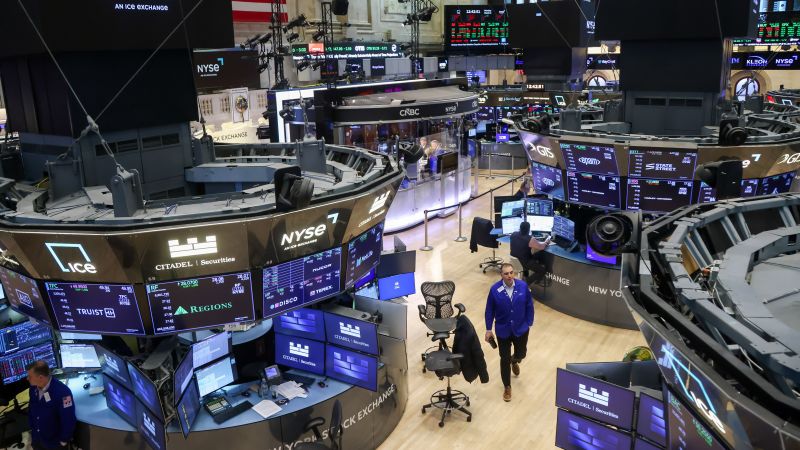
Why US Stocks Fell: Tech Weakness & Economic Fears Drive Sell-Off
The landscape of the US stock market has recently been turbulent, with significant sell-offs rattling investors and prompting widespread concern. A confluence of powerful factors, ranging from pronounced weakness in the technology sector to escalating economic and geopolitical anxieties, has caused US stocks to suffer their most severe downturn in years. This article delves into the primary forces at play, dissecting the intricate web of influences that have pushed major indices into precarious territory and left many investors questioning the market's immediate future.
The Tech Titans' Tumble: A Catalyst for Decline
At the forefront of the recent market instability has been a notable decline in the technology sector, particularly among mega-cap names. Once the darlings of Wall Street, leading tech companies like Microsoft and Meta Platforms (formerly Facebook) have experienced substantial losses, often post-earnings announcements that failed to meet lofty investor expectations. This weakness in tech giants has a disproportionate impact on indices such as the Nasdaq 100, which is heavily weighted towards these firms. The Nasdaq 100, in fact, spearheaded the declines across major indices, signaling a broader retreat from growth-oriented stocks.
During pivotal periods of market corrections, investors witnessed major technology firms – once the driving force behind the market's rally – enduring some of the most brutal falls. Companies like Facebook and Twitter have seen shares tumble significantly, with Amazon also experiencing sharp drops, and even stalwarts like Apple and Microsoft slipping notably. This widespread tech sell-off wasn't just a sector-specific issue; it sent ripples across the entire market, contributing heavily to the overall sentiment that US stocks suffer when their biggest components falter. Indeed, the technology-focused Nasdaq has plummeted more than 20% from its peak, officially placing it in what is known as "bear market" territory. For further insights into this phenomenon, read our detailed analysis on Nasdaq in Bear Market: What's Driving Global Stock Declines?
Economic Headwinds and Monetary Policy Shifts
Beyond tech-specific issues, a raft of economic concerns and shifts in monetary policy have cast a long shadow over investor confidence. One of the most significant factors has been the US Federal Reserve's stance on interest rates. After years of historically low rates designed to stimulate economic growth, the Fed has embarked on a path of increasing rates. While intended to curb inflation and normalize monetary policy, such moves can make borrowing more expensive for businesses and consumers, potentially dampening corporate profits and slowing economic expansion.
The Fed's decision to lift interest rates, coupled with signals that further hikes were likely, albeit at a slower pace, unnerved markets. Simultaneously, the central bank cut its forecasts for economic growth, revising its 2019 projection downwards. This signals a potential slowdown in domestic economic activity. Compounding these domestic concerns are broader global economic challenges. Experts point to a cooling economy in China and a slowdown across the eurozone as significant headwinds. When combined with some recent soft economic indicators from the US, these factors collectively foster an environment where investors anticipate reduced corporate earnings and diminished growth prospects, causing US stocks to suffer as capital flees riskier assets.
It's a delicate balance for central banks; while strong economic growth (the US economy grew at an annual pace of 3.4% in a recent quarter, with consumer sentiment remaining robust) would typically soothe market fears, the prospect of aggressive rate hikes in the face of slowing global growth creates significant uncertainty. Investors become wary that monetary policy might inadvertently tip the economy into a recession, leading to panic selling and a rush to safer havens. The market's reaction, in this context, is often a forward-looking discount of future expected earnings, making current strength less relevant than future projections.
Geopolitical Tensions & Domestic Uncertainty
Market sentiment is not solely driven by earnings reports and economic data; geopolitical developments and domestic political stability also play a crucial role. Recent periods have seen heightened tensions on both fronts, adding layers of uncertainty that make investors exceedingly nervous.
- US-China Trade War: The ongoing trade dispute between the United States and China has been a particularly potent source of market anxiety. Tariffs and retaliatory measures create unpredictability for global supply chains and corporate profitability, especially for companies with significant exposure to both economies. Comments from high-ranking officials, suggesting that reaching a long-lasting trade agreement would be "difficult," have exacerbated fears, leading to market sell-offs as investors grapple with the potential for prolonged trade friction.
- Government Shutdown Fears & Political Brinkmanship: Domestically, political instability and the specter of government shutdowns have further rattled markets. The uncertainty surrounding legislative processes and the potential for political brinkmanship in Washington create an environment where investors perceive increased risk. This domestic turbulence can overshadow positive economic news, as the unpredictability makes long-term planning challenging for businesses and investors alike.
These geopolitical and domestic uncertainties contribute significantly to investor caution, making US stocks suffer from a "risk-off" sentiment. For many, the confluence of these external pressures makes the market a less attractive place for new investment, leading to stagnation or further declines.
Beyond the Headlines: Broader Market Metrics & Investor Psychology
The impact of these various factors has been starkly reflected in the performance of major indices. The market has witnessed one of the worst weekly falls in a decade, with all three major indexes closing lower. The Dow Jones Industrial Average recorded its biggest weekly drop in percentage terms since 2008, while the S&P 500 plummeted significantly. The Nasdaq's decline was the sharpest since November 2008. To understand the depth of this market turmoil, explore our article on US Stocks Plummet: Worst Week in a Decade Rattles Investors.
Despite these dramatic market movements, it's important to note that some economists argue that the steep Wall Street sell-off does not always immediately reflect conditions in the wider economy. Consumer sentiment might remain strong, and recent GDP growth figures could be robust. However, the stock market is often a forward-looking indicator, anticipating future earnings and economic conditions rather than merely reflecting the present. When expectations about future corporate profits begin to shift downwards due to perceived risks – whether from slowing growth, trade wars, or rising interest rates – investors often flee stocks, even if current economic data looks healthy.
Investor psychology plays a critical role here. Fear and uncertainty can lead to panic selling, causing market declines to accelerate beyond what fundamental economic conditions might suggest. This "flight to safety" can be seen in the rush by foreign institutional investors, hedge fund managers, and individual investors alike to pull out of the market. This creates a downward spiral where negative sentiment feeds further selling, making it challenging for markets to find a floor until a clearer economic or geopolitical outlook emerges.
Practical Tips for Investors Amidst Volatility
In times when US stocks suffer, it's crucial for investors to adopt a disciplined approach:
- Maintain a Long-Term Perspective: Market corrections are a normal part of investing. Historically, markets have recovered from every downturn. A long-term outlook helps ride out short-term volatility.
- Diversify Your Portfolio: Ensure your investments are spread across different asset classes, sectors, and geographies. Diversification can help mitigate losses during sector-specific or regional downturns.
- Reassess Your Risk Tolerance: Volatile periods are an excellent time to evaluate if your current portfolio aligns with your comfort level for risk.
- Dollar-Cost Averaging: Continue investing a fixed amount regularly, regardless of market fluctuations. This strategy allows you to buy more shares when prices are low and fewer when they are high, averaging out your purchase price over time.
- Stay Informed, Avoid Panic: While it's essential to understand the market's movements, avoid making impulsive decisions based on daily headlines. Consult with a financial advisor for personalized guidance.
- Look for Opportunities: Market downturns can present opportunities to acquire quality assets at lower prices for long-term growth.
Conclusion
The recent dip in US stocks is a multifaceted event, driven by a powerful cocktail of tech sector weakness, concerns over economic growth and rising interest rates, and a turbulent geopolitical landscape. While the immediate future remains uncertain, understanding these underlying factors is key for investors. When US stocks suffer, it's rarely due to a single cause but rather an intricate interplay of domestic and international pressures. By staying informed, maintaining a disciplined investment strategy, and focusing on long-term goals, investors can better navigate these challenging market conditions and position themselves for eventual recovery.